
How the Zain Jaffer Foundation is Supporting Clean Water Access in the Philippines

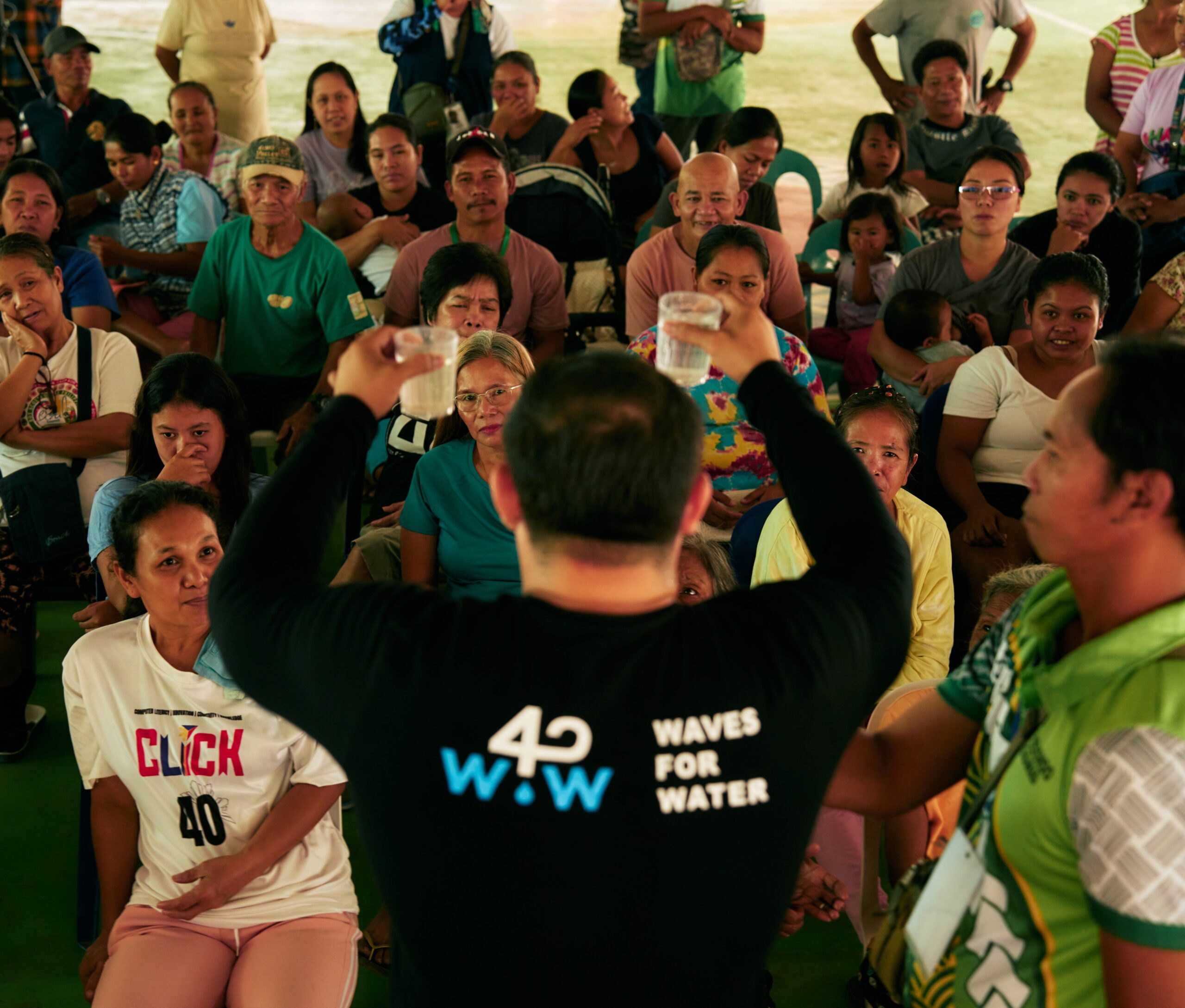
WAVES FOR WATER PH. Providing filters for Brgy. Laiban, Rizal.
In a remote village in the Philippines, the daily struggle for clean water has long shaped the rhythm of life.
Barangay Mabuhay is a rural community in Marabut, a coastal town on the island of Samar in Eastern Visayas. Like many communities across the region, it has relied on a natural spring tucked deep in the mountains as its primary water source. That water is channeled to a series of communal taps, where residents fill up buckets and containers for drinking, cooking, and washing.
During dry spells or after powerful typhoons, access becomes limited. And when heavy rains hit, the water often turns yellow and cloudy. Though government testing shows the source is safe to drink, many residents remain unsure.
In September 2024, that uncertainty started to shift.
With support from the Zain Jaffer Foundation and its local partner Waves for Water Philippines, over 1,000 residents in Barangay Mabuhay gained reliable access to clean water.
Fifty-eight gravity-fed filters were distributed to 350 households, with each filter shared among six families. These filters require no electricity, can purify over a million gallons of water, and are designed to last for years. Just as important, local leaders were trained in how to assemble, clean, and maintain the filters themselves. This training ensures that the system is sustainable and community-led.
Handwashing stations were also installed at Mabuhay Elementary School to help improve hygiene and reduce illness among students.
Addressing a Basic Need
For community members like Barangay Councilor Shirley Daga, the project meets an urgent need.
“Most of our residents fetch water from the communal taps. Many families cannot afford to buy bottled mineral water every month, so this is their main drinking source,” she explained.
In the past year alone, the barangay recorded several cases of diarrhea, a reminder of the health risks that come with unsafe water. The filters offer a simple but effective way to protect families, especially children, from harmful bacteria.
But the impact of clean water goes beyond health. What was once a time-consuming daily chore has now become easier. Residents are spending less time hauling water and more time on their livelihoods, education, and rest.
Strengthening Community Ownership
This initiative is part of the Zain Jaffer Foundation’s broader commitment to improving lives through grassroots, community-led solutions. It follows an earlier pilot project in Barangay Laiban, Rizal, where more than 200 families received similar support.
Rather than approaching water access as a one-time donation, the Foundation’s strategy focuses on equipping communities with tools they can manage themselves. From hands-on training to sustainable systems, each project aims to foster long-term self-reliance.
“Seeing communities take ownership of their health and well-being through simple, sustainable solutions like these filters is incredibly rewarding,” said Zain Jaffer, founder of the Zain Jaffer Foundation. “Our hope is that this access to clean water brings greater peace of mind and improved health to the families of Barangay Mabuhay, and we look forward to supporting more communities in the future.”

WAVES FOR WATER PH. Providing filters for Brgy. Mabuhay, Samar
Creating a Foundation for the Future
In Barangay Mabuhay, the change may be quiet, but it is deeply felt. A mother boiling water less often. A student washing their hands before class. A family feeling confident that the water they drink is safe.
Clean water does not just meet today’s needs. It builds the foundation for a healthier, more resilient future.
At the Zain Jaffer Foundation, we believe that access to clean water is a basic right, and when that right is met, lives begin to transform. In communities like Mabuhay, we are seeing what is possible when the tools for change are placed directly into the hands of those who need them most.